
First impressions
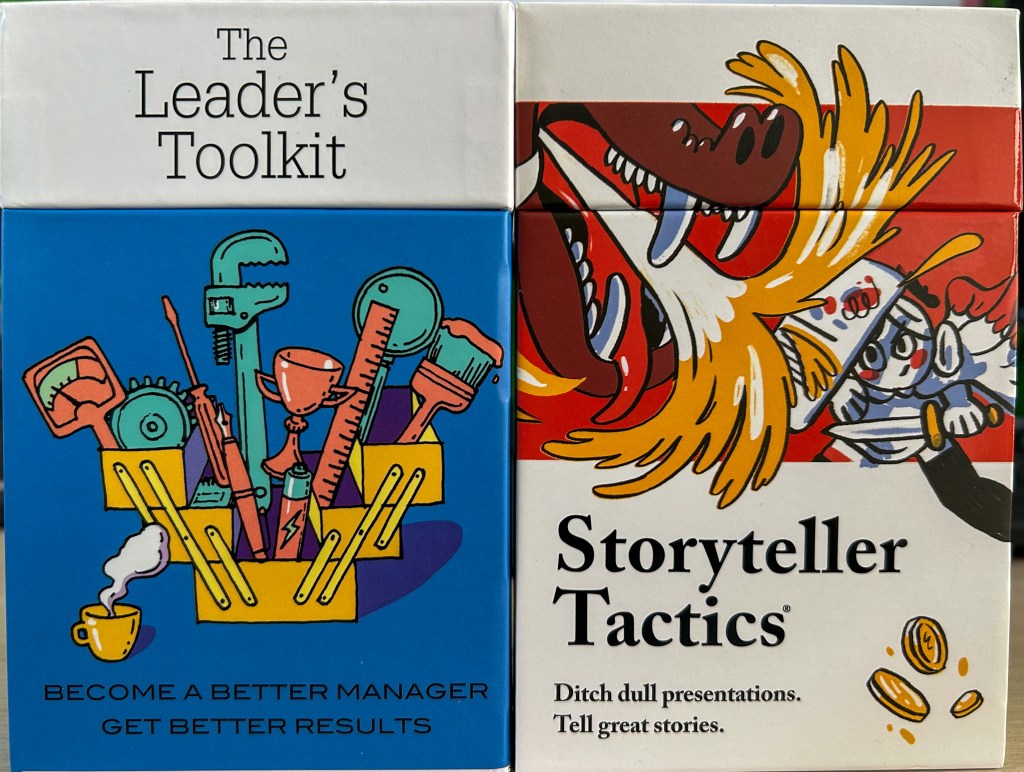
When I got the package in the mail and opened it, I noticed it was similar to the Pip Decks box I reviewed earlier. The box has the same size and a similar design. The same goes when you open the box. Similar-sized cards and a more or less comparable structure. They feel the same quality-wise, so that shouldn’t make any difference.
Main structure
When you open the box and pick out the cards, the first two you will see are the ones with the different categories, instructions (including QR codes to online resources), and the leader system. Again, this system is more or less akin to the one used in the Pip deck.
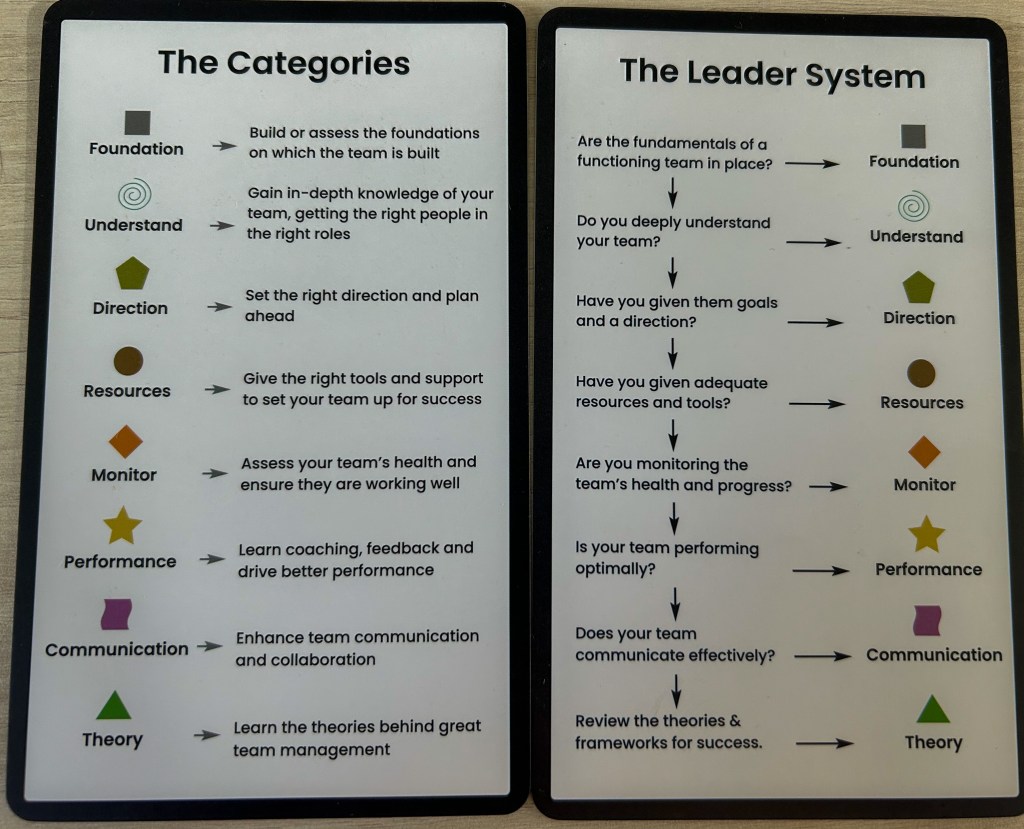
The funny thing is that the theory one is last when you go through the categories. I would have expected it to be the first one, but maybe that’s how I work. Get the theory in first, and then move on to the rest. On the other hand, it feels like the leader system as the concept of all the categories is called, is more a general outline. When you look at the cards, you’ll see cross-references to other cards in a similar area.
Physical product
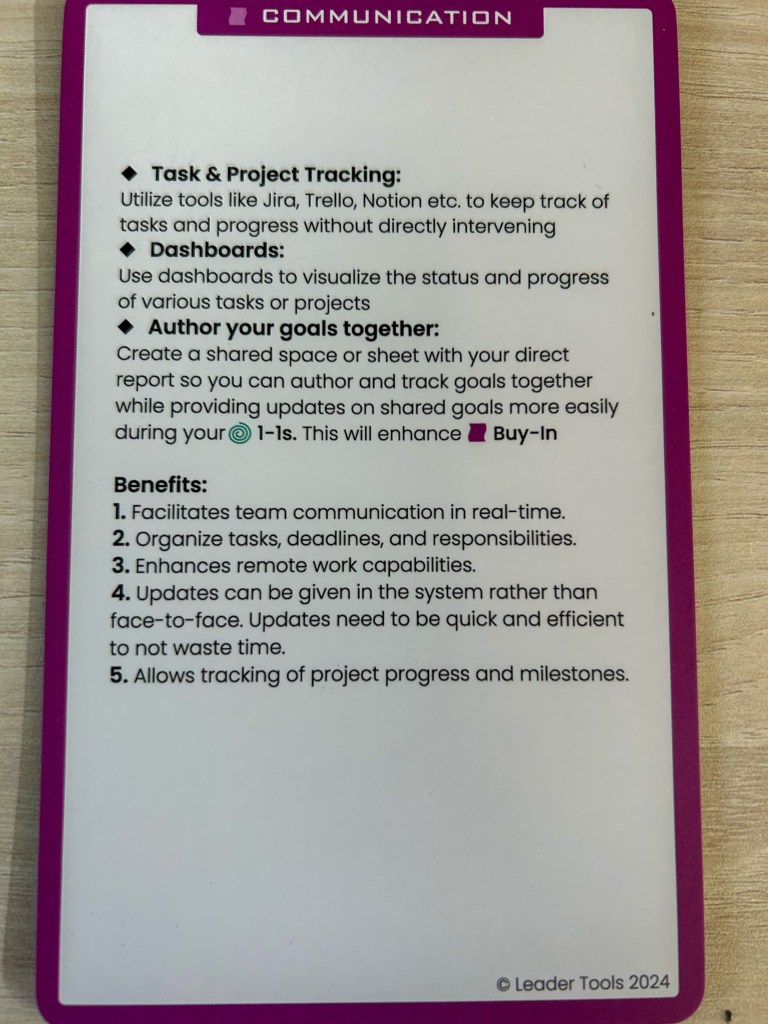
This is one of the reasons I personally really like the physical product. I can take a related card, put it next to the one I found interesting, and slowly create a physical thread of thought or learning. There is no way I could do that with the online product without either running out of space on the monitor or losing track with all the open windows.
Content
Truth be told, I’m not a leader in the sense of being in charge of others. The box really tries to tell you it’s aimed at leaders, especially with the subtitle “become a better manager.” This is incorrect, in my opinion. It should be called the team leader’s toolkit, which explains how to become a better team member or leader.
Why? Maybe it’s the country I live in or the company I work for, but there’s not much hierarchy in my life. Management is mainly aimed at helping you excel at what you do and removing obstacles. They get out of the way as soon as possible, but always have our backs.
For my work, I have to work in teams and with other people. I was pleasantly surprised to see tips on how I can improve my behaviour in teams. I don’t need to be the team leader to improve the performance of my team, my teammates, or even myself.
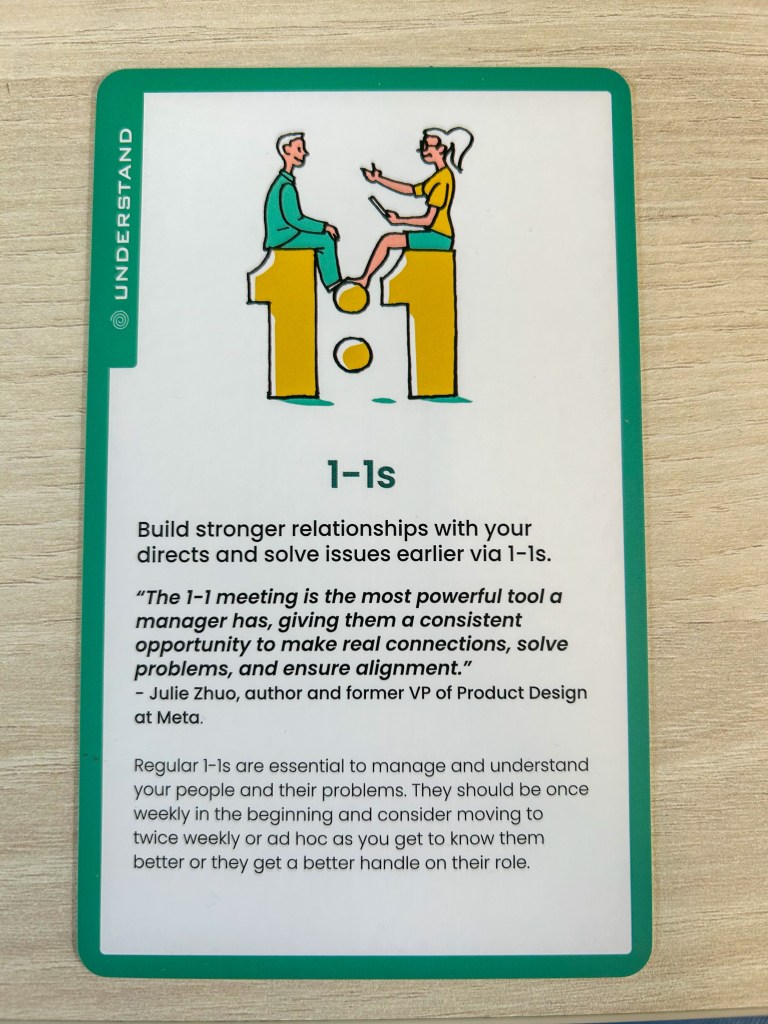
As I mentioned, I would like to start with the theory part. This is where my foundation lies and where I read about frameworks, types of people in a team (like the toxic team member), how to work in motivating people and other things. I could side-track to a related card and learn more when I found something interesting.
So, all good then?
Well, I like most of it. The thing about KPI, for instance, is that it nags. Maybe that’s a me thing, but if you give me a KPI, I’ll not only try to reach it but also try to go over it (or under it). In my experience, if you set a clearly defined goal, people either try to reach it or overdo it. In both cases, I think “management” misses the point. Perfection is the enemy of good enough. And you can’t always define good enough. It’s a moving target and has many dependencies.
Advice?
If you’re comfortable in your role, it’s all fine, and you have no ambition to grow, leave this to other people. Don’t get me wrong, I don’t mock you in any way. There’s nothing wrong with just doing your job and then being done with it. But if you’re in a team and want more insights into why things are happening, get this deck. Warning, you might recognise more than you might be prepared for when opening the box. Sometimes it can be a confrontation. Then again, you can’t grow if you’re unwilling to look at yourself.
If you really, really want to be a manager (why, no really, why?), this will give you a good foundation to find areas you need to improve in, maybe in communicating, maybe in letting your team go and do what they can do best.
Try it out?
If you want to try it out for yourself, follow this link to acquire your own set!
 Reitse's blog