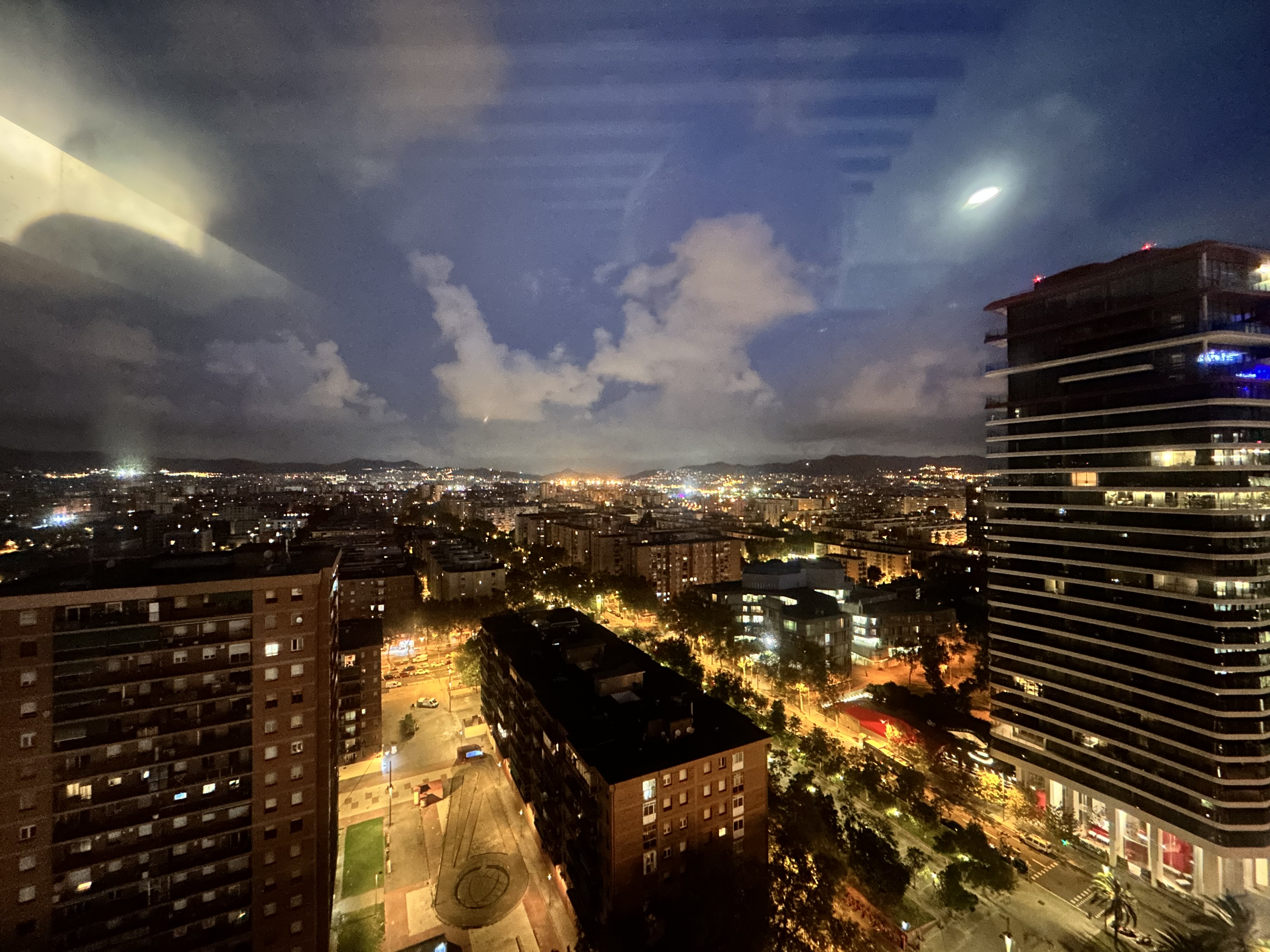

Last week was filled with talks about SQL Server and Fabric. A large portion of the community travelled to Barcelona to learn from community leaders and Microsoft on their favourite topics. I’ll take you through my personal experiences and highlights.
Day 0: the MVP day
On Monday, you have three options, depending on your relationship with Microsoft. You can join the Partner Day if your company is a Microsoft partner. You can enjoy a number of workshops, with the day filled with a deep dive into a specific topic. Or, if you’re in the MVP program, you can join that day.
The company I work for is a Microsoft partner, but as more coworkers joined the event, I chose to register only for the MVP day. Now, you probably want to know what was discussed. I can answer that in a three-letter acronym: NDA. Non-disclosure Agreement.
With that out of the way, let’s move to the more regular days.
Day 1: the keynote
The first day kicked off with the keynote. Microsoft leadership took the stage and announced the new features. A lot of AI was involved, and I’m still ambivalent. On the one hand, I can see how these improvements can help. But on the other hand, I can see the price increases for all the hardware, the resulting lack of hardware for other Azure (and on-premises) workloads, and the environmental impact.
My main gripe is that people seem to accept the AI results without too much criticism. Again, ambivalence. On the one hand, we can wait for a huge data leak; on the other, I’m guessing there will be a lot of work in the near future to fix the vibe-coded solutions. We’ll see what happens.
The most interesting announcements from the keynote, again in my opinion, are the following.
- On-Demand capacities. Also called F0, where you pay only for what you use. The docs should land in a few weeks to help calculate when it makes sense to use them.
- Fabric policies, akin to Azure policies, let you assign settings and permissions at a different level in your tenant. Really curious to see where this takes us
- The public preview of Azure SQL Hyperscale Serverless, where the database will show the same behaviour as the General Purpose Serverless databases. It can be a nice cost saver.
- Azure Local now fully supports SQL Server
- Massive upgrades to what Microsoft calls observability. I call it monitoring, but in essence there are a lot of improvements to be found there.
- A small update, somewhat hidden in the avalanche of updates, is the following. You can now invoke Fabric APIs from the pipeline, with the payload preconfigured for you.
- AI-assisted troubleshooting. This needs some extra items, as you need an Observability Agent and Workspace monitoring connected to an eventhouse. For production systems supported with a small team, this could be an excellent way to diagnose issues faster.
- Workspace monitoring now supports a single eventhouse for multiple workspaces
All good then? Well, I’m still missing a solid solution for item ownership. We still struggle to make it work so people can safely leave the organisation without Fabric items coming to a halt (or being removed). I was hoping for some more insights.
After the keynote, every attendee went out for coffee and the rest of the agenda.
The conference
I’ll summarise the rest of the days in one.
The session that stood out most for me was the one talking about Fabric runtime 2.0 and the Native Execution Engine (NEE). The presenters showed true passion for their product, and I learned I had missed several performance settings that will improve performance across the board. I have tested 2.0 and NEE earlier, but I clearly need to redo those tests, as there have been massive improvements.
Also, the current 1.3 runtime is marked for end of support. It’s time to change your development environments to this new runtime. According to the engineers, everything should be backwards compatible. From my point of view, and as with an AI response, I want to trust it but still verify.
The other excellent session was on performance pitfalls in Fabric. It gave a nice overview of things to keep in mind when working in Fabric. I spent half the session messaging my coworkers to see whether we were aware of these pitfalls. It turns out we missed some, and that’s perfectly fine. We can’t know everything, and that is also why we attend conferences. To learn and improve.
It almost goes without saying, but the sessions on SQL were solid and useful. I especially liked the session. where the presenters were doing live debugging of an Azure SQL issue, showing how AI can support. The main take-away there was that you have to check the generated code before executing it. But it can explain the issue in human terms; something that can be a great help!
A significant amount of time was spent in the expo hall and the “hall track”. Talk with people, engage with specialists. This is the most valuable part of these conferences. It’s so easy to attend sessions, learn and be done. But the best value comes from talking to people, exchanging contact details, and knowing who to ask when you’re stuck.
I also spent time in the community zone at the certification booth. People could get a free certification voucher (and, with that, three for coworkers). It turned out to be very popular. Some attendees came with good questions about which certification to take or how this works.
Finally, I spent time in the exhibition hall with the sponsors. One of them sent out an email before the conference, announcing a new Fabric workload they created. It looked really cool; the demo confirmed this. I also gave feedback on a feature; apparently they built it the next day. Some companies used somewhat aggressive sales tactics; they walked up to me inside or outside the exhibition hall and started a harmless conversation that quickly turned into a sales pitch. It’s a good way to make me not want to engage with them.
Power Hour
The Power Hour is a special event. You’re garanteed to not learn anything, but to have a lot of fun at the same time. This year, they decided to do their version of Taskmaster; Taskflowmaster. 4 Microsoft employees had to execute a number of weird tasks (including talking to a well-known Swede) to win some prizes. It was very well executed and had a lot of links to the original series. My role was to throw swag (t-shirts and other funny things) into the audience. This hour was a true highlight of the event.
Final words
It was a week well spent. I managed to catch up with a large number of people; I missed out on a significant number as well. There is just not enough time. I learnt new things, met new people and got a lot of inspiration for tests, blogs, and customer cases.
Next year, the conference will be very close to home in the RAI in Amsterdam, will I see you there?

